
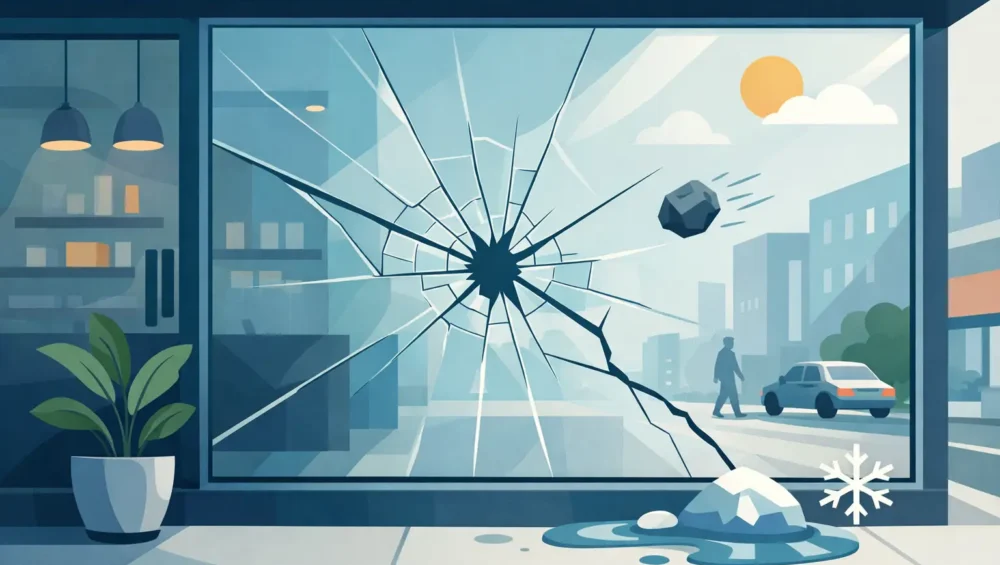
A hairline crack in a storefront window rarely stays small for long. One day it looks cosmetic. A day later, after a temperature swing, a door slam, or a little frame movement, it can spread across the pane and turn into a safety, security, and business problem. If you are asking what causes storefront glass cracks, the short answer is that cracks usually start from stress – and that stress can come from impact, installation issues, structural movement, or changing weather.
For retail shops, office entrances, restaurants, and mixed-use properties across the DMV, cracked storefront glass is more than an appearance issue. It affects curb appeal, customer confidence, energy efficiency, and liability. The key is understanding why the crack happened in the first place, because the cause often determines whether a repair is possible, whether full replacement is the better option, and how to prevent the same problem from happening again.
What causes storefront glass cracks most often?
In real-world commercial settings, storefront glass usually cracks for one of a few practical reasons. The most common is direct impact. That can mean a shopping cart, a door handle hitting the glass, vandalism, storm debris, delivery equipment, or even a small object striking a vulnerable edge. Glass is strong in many ways, but once force is concentrated in one spot, especially near a corner or edge, the risk of cracking rises fast.
Another common cause is frame stress. Storefront systems are not just glass panels. They are complete assemblies made up of aluminum framing, setting blocks, sealants, door hardware, and surrounding structural components. If the frame shifts, twists, expands, or holds the glass too tightly, pressure builds over time. In those cases, a crack may appear without any obvious impact at all.
Temperature change is also a major factor. Storefront glass is constantly exposed to outdoor heat, cold, direct sun, interior HVAC, and shaded areas. When one section of glass gets much hotter or colder than another, uneven expansion can create thermal stress. This is especially true on large panes and heavily sun-exposed elevations.
Impact damage is the obvious cause, but not the only one
When property owners first notice cracked glass, they often assume someone hit it. Sometimes that is exactly what happened. A visible point of impact, starburst pattern, or chip can tell that story clearly. But not every crack starts with a dramatic event.
A storefront can develop cracks from repeated everyday use. Entry doors that close too hard, loose closers, misaligned pivots, or vibrating frames can all transfer force into adjacent glass over time. In busy commercial spaces, that kind of wear is easy to miss until the glass finally gives way.
This is why the crack pattern matters. A technician will usually look at where the crack begins, how it spreads, and whether there is edge damage, center impact, or pressure from the frame. That diagnosis helps identify the cause instead of just treating the symptom.
Frame problems can put constant pressure on the glass
Many storefront glass issues start around the frame, not the pane itself. If the aluminum storefront system was installed out of square, if fasteners have loosened, or if the opening has shifted slightly with age, the glass may be under constant tension. It may hold for months or even years before a visible crack appears.
This is one reason replacement should never be treated as glass-only when the surrounding system is part of the problem. If a new pane is installed into a stressed or misaligned frame, the new glass can crack again. For business owners and property managers, that means more downtime and more cost.
Improper glazing can also contribute. If the glass is resting incorrectly, pinched too tightly, or missing support where it needs it, stress collects at vulnerable points. On paper, the glass may be the failed part. In practice, the failure often began in the installation details.
Thermal stress is a real answer to what causes storefront glass cracks
Not every crack comes from force. Thermal stress is a frequent but overlooked answer to what causes storefront glass cracks, especially in commercial buildings with large glass exposures.
Here is how it happens. One section of the pane heats up from direct sunlight while another section remains cool because of interior air conditioning, exterior shading, window coverings, decals, or nearby building features. The hotter area expands more than the cooler area. That uneven movement creates stress within the glass. If the conditions are right, a crack forms.
Thermal cracks often start at the edge and move inward. They may look cleaner and less shattered than an impact break. Large panes, tinted glass, and storefronts with strong sun exposure can all be more vulnerable, depending on the glass type and installation.
This does not mean sun alone ruins storefront glass. It means the full combination matters – glass size, exposure, frame condition, interior climate, and whether the pane was the right product for the application.
Building movement and settling can show up in the glass
Commercial buildings move more than many people realize. Materials expand and contract. Floors shift slightly. Storefront openings settle. Nearby construction, heavy traffic vibration, and structural aging can all play a role.
Even minor movement can create enough distortion in a storefront system to stress the glass. This is especially true in older buildings, multi-tenant retail strips, and properties where previous repairs were done in stages over time. A crack that seems random may actually be a sign that the opening is no longer perfectly aligned.
That is why recurring cracks deserve a closer look. If the same opening has had multiple failures, the underlying issue may not be accidental damage at all. It may be the frame, the structure, or the way the system is carrying load.
Edge damage makes glass much more vulnerable
The edges of storefront glass are especially sensitive. Small chips, poor handling during installation, or contact with hard frame components can weaken the pane before a crack is ever visible. Then a normal event – a hot afternoon, a firm door close, a minor bump – becomes the final trigger.
This is one reason professional handling matters. Storefront glass can look perfect after installation but still have hidden edge damage that shortens its life. Once that weak point is there, the glass has less margin for everyday stress.
For property managers, this also explains why a crack can appear “out of nowhere.” The real cause may have started earlier, and the visible failure happened later.
Can storefront glass crack from poor maintenance?
Sometimes, yes. Poor maintenance usually does not crack the glass by itself, but it can create the conditions that make cracking more likely. A failing door closer, loose frame components, worn weatherstripping, or neglected hardware can all increase vibration, misalignment, and impact risk.
Drainage and seal issues matter too. Water intrusion around the framing can affect surrounding materials and contribute to movement or corrosion. If a storefront system is already under stress, neglected maintenance can speed up failure.
Routine inspections are especially valuable in high-traffic buildings. Catching a loose hinge, shifting frame, or hard-closing door early is much cheaper than dealing with shattered glass, emergency board-up, and interrupted business hours later.
When a crack means immediate action
Not every crack looks severe at first, but storefront glass should be evaluated quickly once damage appears. If the crack is expanding, located near a door, affecting tempered glass, compromising security, or creating sharp edges, it is no longer a wait-and-see situation.
For businesses, timing matters. Even a small crack can affect customer safety and expose the property to weather, theft risk, or code concerns. In many cases, temporary protection followed by proper replacement is the safest route.
A professional assessment can also determine whether the issue is isolated to the pane or tied to the frame and hardware. That matters because replacing the glass without addressing the source of the stress can lead to repeat failures.
Repair or replacement depends on the cause
Storefront glass is not a one-answer category. In some cases, a full replacement is the only appropriate option, especially when safety glass is compromised or the crack affects structural performance. In others, the surrounding storefront system also needs correction so the new glass is not exposed to the same pressure.
That is where experienced commercial glass service makes a difference. A dependable contractor should not just measure the opening and swap the pane. They should identify why the crack happened, check the storefront frame, review the door function if applicable, and recommend the right fix for the long term. Freddy Glass & Doors approaches storefront problems that way because a fast response only helps if the repair is done correctly.
If your storefront glass has cracked, the best next step is simple: treat it early, not after it spreads. The sooner the cause is identified, the easier it is to protect the property, avoid repeat damage, and keep your entrance looking and working the way it should.