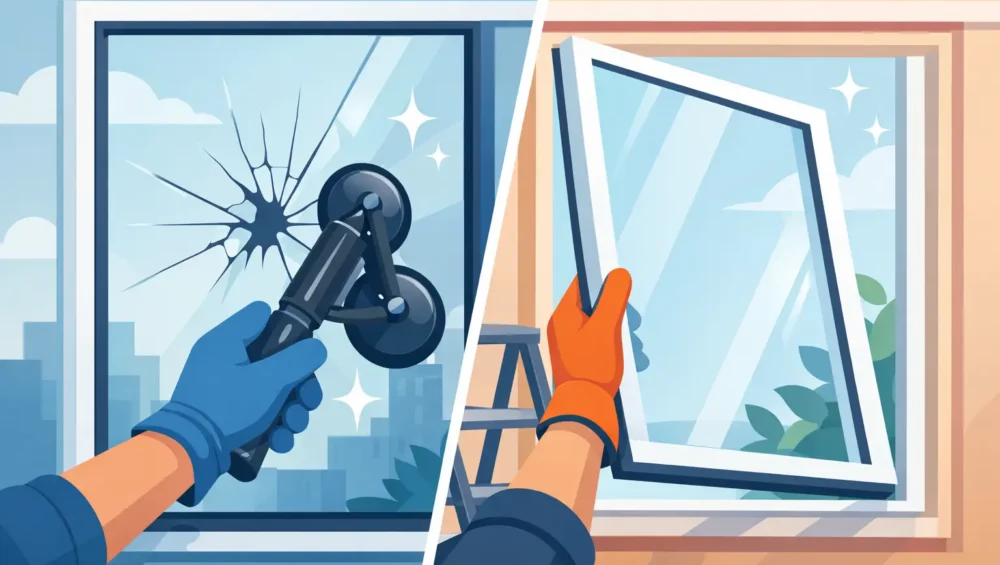
A small crack in a bedroom window can feel manageable. A shattered storefront panel or a fogged double-pane unit is a different story. If you are asking can window glass be repaired, the short answer is yes – sometimes. The real answer depends on the type of damage, the kind of glass, and whether the problem is only cosmetic or affects safety, insulation, and security.
For homeowners and property managers, that distinction matters. A quick fix can save money when the damage is minor. But trying to repair glass that should be replaced often leads to bigger problems, from spreading cracks to lost energy efficiency to a window that no longer protects the property the way it should.
Can window glass be repaired in every situation?
No. Some glass can be repaired, but not every damaged window should be. In most cases, repair is possible when the damage is small, stable, and limited to a single area of the glass. Once the damage affects the strength of the pane, the seal of an insulated unit, or the safe operation of the window, replacement is usually the better call.
This is why a professional inspection matters. Two windows can look similar from a few feet away and need completely different solutions. A surface chip on one pane may be repairable. A hairline crack in tempered glass or a failed insulated glass unit may require full replacement, even if the visible damage seems minor.
When window glass repair makes sense
Glass repair is usually most realistic for minor chips, very small cracks, or superficial damage that has not compromised the whole pane. This is more common on certain residential windows and some commercial applications where the structural integrity of the glass is still intact.
For example, a small chip caused by debris or light impact may be filled or stabilized. The goal is to improve appearance, reduce the chance of spreading, and buy time before replacement becomes necessary. In some cases, specialized resins can help with small blemishes, though the result is not always invisible.
Repair also makes sense when the damage is limited and the rest of the window system is in good shape. If the frame, seals, and hardware are all functioning properly, and the glass issue is truly minor, a targeted repair can be a practical solution.
That said, repair is rarely a forever fix. It is often a way to address a small problem before it turns into a larger one. If the pane is under stress, exposed to weather swings, or located in a high-traffic area, even a repaired spot may need closer monitoring.
When replacement is the better option
There are plenty of cases where replacing the glass is not just recommended but necessary. Cracks longer than a few inches, impact damage near the edge of the pane, shattered glass, and damaged safety glass usually fall into this category.
Double-pane and insulated glass units are another common example. If you see fog, condensation, or a milky appearance between the panes, the seal has likely failed. That is not a surface problem you can patch from the outside. The insulated unit itself generally needs to be replaced to restore clarity and energy performance.
Replacement is also the smarter choice when safety is involved. If a window is part of a door, near a walkway, in a commercial storefront, or installed in an area that requires tempered or laminated safety glass, guessing is not worth it. The wrong repair can leave the property vulnerable and may not meet code or safety requirements.
For many property owners, replacement also makes sense when the cost gap is small. If a repair offers only a short-term result, spending a bit more on proper replacement can save time, repeat service calls, and future damage.
What affects whether glass can be repaired?
The first factor is the type of glass. Single-pane glass is simpler than insulated glass, and standard annealed glass behaves differently than tempered or laminated safety glass. Once tempered glass cracks, it cannot be repaired in any meaningful way. It must be replaced.
The size and location of the damage matter too. A tiny chip near the center of a pane is very different from a crack running from the edge. Edge damage is especially concerning because it weakens the pane where stress tends to build. That often means the glass is more likely to fail further.
Window function is another factor. If the sash no longer opens or closes correctly, or if the frame has shifted and is putting pressure on the glass, repairing the visible damage alone will not solve the root issue. The same goes for moisture intrusion, broken seals, or damaged glazing components.
Age also plays a role. Older windows may use outdated glass sizes, worn frames, or materials that make repair less cost-effective. In those cases, replacement can provide a cleaner and more reliable result.
Residential vs. commercial glass repair
In homes, the most common issues are cracked panes, failed insulated units, and accidental impact damage. Homeowners often want to know whether they can avoid replacing the entire window. In many cases, they can. If the frame is still sound, the glass itself may be replaced without changing the whole window unit.
Commercial properties have different pressures. Storefront glass, office entry systems, and large fixed panels affect security, appearance, and daily operations. A crack in commercial glass is not just cosmetic. It can affect customer safety, create liability concerns, and make the business look neglected.
That is why speed matters more in commercial settings. Temporary board-up may be the first step after a break, followed by proper glass replacement once measurements and materials are confirmed. Repair tends to be less common in those situations because code, safety, and appearance standards are stricter.
Why DIY fixes usually fall short
Clear tape, store-bought fillers, and online hacks may seem like a quick answer, but they rarely solve the actual problem. At best, they offer a short-term cosmetic improvement. At worst, they delay proper service while the damage spreads.
Glass failure is not always obvious to the untrained eye. A pane can appear stable but have hidden stress points, seal failure, or unsafe edges. This is especially true with double-pane windows, tempered glass, and commercial systems where hardware and framing all work together.
Professional repair or replacement also protects the fit and finish of the window. Proper installation affects insulation, water resistance, security, and how the window operates over time. A rushed patch job can create more expensive repairs later.
What to do if your window glass is damaged
Start by looking at the urgency. If the glass is shattered, actively cracking, or leaves the property exposed, treat it as a safety issue. Keep people away from the area and arrange professional service right away. If the opening is vulnerable, temporary protection may be needed until permanent glass is installed.
If the damage is minor, avoid putting pressure on the window. Do not slam it shut, force it open, or try to scrape around the crack. Small damage can grow fast with vibration, temperature changes, or frame movement.
Then get a professional opinion. A good glass contractor will tell you plainly whether repair is realistic or whether replacement is the smarter investment. For customers in the DMV who need fast answers on residential or commercial glass, Freddy Glass & Doors handles both urgent repairs and scheduled service with that exact approach.
Cost matters, but so does the result
It is natural to ask which option is cheaper. Repair is usually less expensive up front, but only when the damage truly qualifies for repair. If the fix is temporary and replacement is inevitable, the lower initial price can be misleading.
Replacement costs more because it involves new glass, measurements, and installation. But it also restores the window the right way. That matters when you are dealing with insulation, noise reduction, curb appeal, tenant satisfaction, or business presentation.
The best value is not always the lowest number on day one. It is the solution that restores safety, performance, and peace of mind without repeated problems.
The bottom line on damaged window glass
So, can window glass be repaired? Yes, but only under the right conditions. Small chips and limited surface damage may be repairable. Cracked safety glass, fogged insulated units, shattered panes, and damage that affects performance usually call for replacement.
If you are unsure, do not wait for the crack to spread or the seal failure to get worse. The sooner the glass is evaluated, the more options you usually have. A fast, honest assessment can save you from bigger damage and help you get the property secure, functional, and looking right again.
When glass is damaged, the goal is not just to cover the problem. It is to fix it in a way that holds up.