A cracked pane changes a house fast. One minute the room feels secure, and the next you are dealing with sharp glass, outside air, and the worry that the damage could spread before you can fix it. If you are searching for how to repair glass window on house, the first thing to know is this: some repairs are manageable, but not every broken window should be a DIY job.
The right approach depends on what actually failed. A small crack in a single-pane window is very different from shattered tempered glass, a failed insulated unit, or a broken pane near a door or child-access area. Safety comes first, and a clean temporary fix is better than a rushed repair that leaves the window weaker than before.
How to repair glass window on house safely
Before touching the window, clear the area. Keep children and pets away, put on cut-resistant gloves and eye protection, and check the floor, sill, and nearby furniture for loose shards. Even a hairline break can drop slivers where you do not expect them.
If the glass is actively loose or broken through, do not press on it. Stabilize the opening first. Painter’s tape or masking tape can help hold cracked sections in place temporarily, but tape is not a real repair. If weather, security, or sharp edges are a concern, boarding up the opening until proper service is available is often the smarter move.
For homeowners, the first decision is whether the pane can be repaired at all. In many cases, glass itself is not truly repaired. It is replaced. What can sometimes be repaired are the glazing materials around it, the sash components, or a very minor surface issue. That distinction saves time and frustration.
When a window can be repaired and when it needs replacement
A small scratch on glass may be improved, though deep scratches usually remain visible. Loose glazing putty around an older single-pane wood window can often be removed and redone. A rattling pane may just need fresh glazing points and sealant.
But if the glass is cracked, chipped at the edge, shattered, or fogged between double panes, replacement is usually the correct fix. Double-pane and insulated windows are sealed units. Once that seal fails or one pane breaks, patching the surface will not restore the window’s performance. The same goes for many modern vinyl and aluminum windows where the glass is set as a manufactured unit.
There is also a code and safety side to this. Glass near doors, in bathrooms, close to the floor, or in certain large openings may need tempered or safety glazing. Using the wrong replacement glass is not just a cosmetic mistake. It can create a real hazard.
A basic repair for older single-pane windows
If you have an older wood window with one broken pane and the frame is still in good shape, this is the most realistic DIY scenario. Even then, patience matters more than speed.
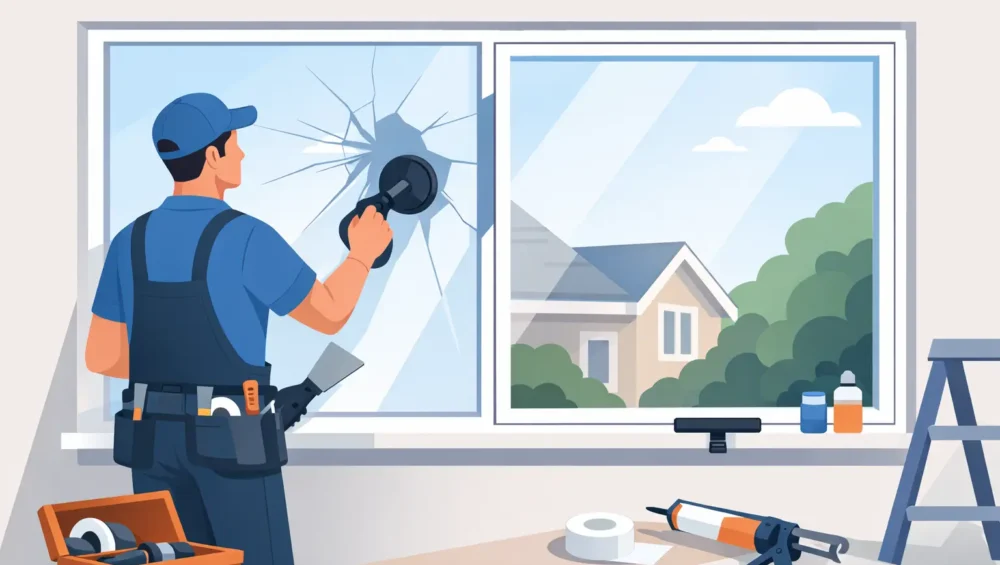
Start by removing loose glass carefully. Use pliers for larger pieces and avoid forcing shards out of tight corners. Once the old glass is out, scrape away the remaining glazing putty and remove the small metal glazing points holding the pane in place. Clean the channel thoroughly so the new glass can sit flat.
Measure the opening after cleanup, not before. Glass should be slightly smaller than the exact opening so it can fit without binding as the frame expands and contracts. A glass shop can cut the pane to size, and this is where accuracy matters. A bad measurement often turns a simple repair into a second trip and another delay.
Set the new pane into fresh glazing compound or bedding sealant, then press it in gently. Install new glazing points to hold it securely. After that, apply glazing compound around the perimeter, smooth it neatly, and let it cure based on the product instructions before painting. If the putty line is uneven or gaps are left open, moisture will find its way in.
This kind of repair can work well on older homes, sheds, detached garages, or classic wood sash windows. It is less practical on modern insulated windows, specialty glass, or anything with a damaged frame.
What homeowners often get wrong
The biggest mistake is trying to save cracked glass that should be replaced. Sealants, epoxies, and repair kits may look fine for a week, but they rarely restore strength, clarity, or insulation. Another common issue is measuring the visible glass instead of the actual glazing channel. That difference matters.
People also underestimate frame damage. If the sash is rotted, warped, or bent, installing new glass alone will not solve the problem. The pane may sit under stress and crack again. In those cases, a proper repair means addressing both the glass and the surrounding structure.
Temporary fixes that buy you time
Sometimes the goal is not a finished repair today. It is making the property safe until the right glass can be installed. That is especially true after storms, accidental impact, or break-ins.
For a temporary fix, tape can reduce movement in a cracked pane, and heavy plastic sheeting can help block wind and moisture. Plywood board-up is better when security is a concern or the opening is large. The key is knowing that temporary protection is not the same as restoration. It keeps your home safer, but it does not bring back the window’s strength, energy efficiency, or appearance.
If the damage happens at night, before bad weather, or on a ground-floor opening, fast response matters more than a perfect finish in the moment. Securing the opening first is the priority.
Signs you should call a professional instead
If the window is double-pane, tempered, laminated, oversized, unusually high, or part of a door system, professional service is usually the safer and more cost-effective route. The same applies if broken glass is still in the frame, the sash is damaged, or the opening needs emergency board-up.
Property managers and business owners often face an added issue: time. A DIY attempt that stretches into several days can affect tenant comfort, security, and curb appeal. A pro can identify the glass type, match the thickness, check code requirements, and finish the job without guesswork.
In the DMV area, that speed can make a real difference. A broken house window in summer humidity or winter cold does not stay a small problem for long. Water intrusion, drafts, and security concerns all get worse the longer the opening sits exposed.
Cost depends on the window, not just the crack
Homeowners often ask whether it is cheaper to repair or replace. The honest answer is that it depends on the window system. A basic single-pane replacement is usually straightforward. A double-pane unit, custom size, tempered pane, or specialty grid pattern costs more because the materials and fabrication are different.
Labor also changes based on access. A first-floor bedroom window is not the same job as a high foyer window or a unit above a stairwell. If emergency service is needed, that affects timing and pricing too. What matters most is getting the right fix the first time so you do not pay twice.
How to protect your home after the repair
Once the glass is repaired or replaced, take a look at why it failed. Some breaks are accidents. Others point to a bigger issue, like frame movement, slamming doors creating pressure, worn hardware, or tree branches striking the house during wind.
Check locks, sash alignment, and weatherstripping. If moisture has gotten into the frame or wall, deal with that early. Fresh glass in a neglected opening can still end up with leaks, drafts, or repeat damage.
For homeowners who want a dependable fix without the back-and-forth, this is where working with an experienced local glass contractor helps. Companies like Freddy Glass & Doors handle both urgent repairs and proper replacement work, which means you are not left figuring out whether your window needs a patch, a new insulated unit, or a full secure board-up first.
A broken window always feels urgent because it is. The best repair is the one that restores safety, seals the opening correctly, and matches the window you already have. If the job is small and the frame is sound, a careful DIY repair may do the trick. If the glass is cracked through, insulated, loose, or part of a larger problem, getting it handled quickly and professionally is the safer call.