A stuck exit device does not give you much warning before it becomes a serious problem. One day the door feels a little harder to push. The next day employees are shoulder-checking it open, customers are hesitating at the exit, or the latch stops catching at all. That is when panic bar repair moves from a maintenance item to a safety issue.
For retail stores, offices, schools, restaurants, and shared commercial buildings, panic bars are not optional hardware. They are part of how people exit quickly during an emergency and how your property stays secure the rest of the time. When the device starts failing, the risk is not just inconvenience. It can affect life safety, daily operations, security, and code compliance.
What panic bar repair usually involves
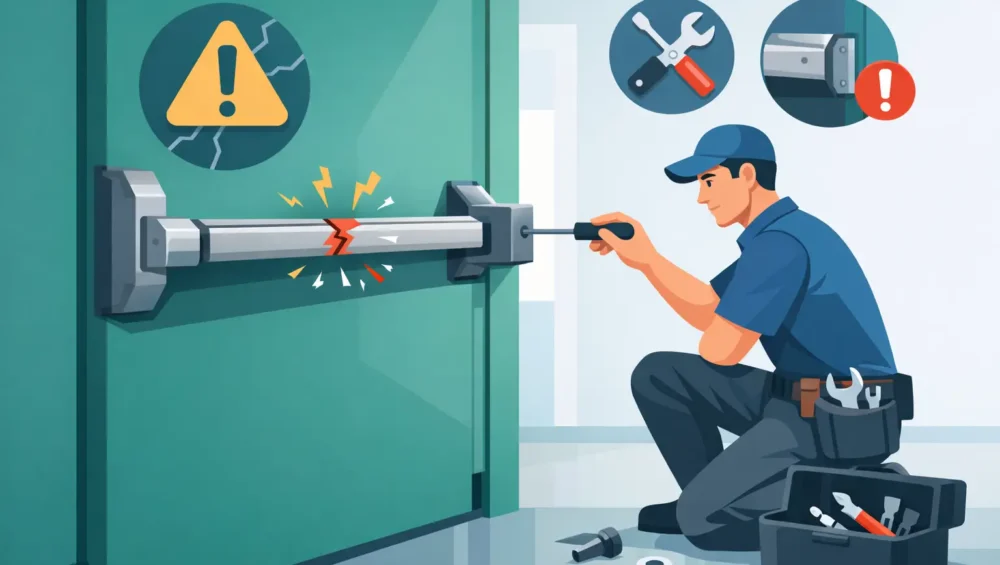
A panic bar, sometimes called an exit device, is designed to release the latch when pressure is applied across the bar. That sounds simple, but the system includes several moving parts that have to stay aligned. The push bar, internal mechanism, latch, strike plate, door closer, hinges, and frame all work together. If one part shifts, wears down, loosens, or gets damaged, the whole opening can start acting up.
Panic bar repair can mean adjusting the hardware, replacing worn internal components, realigning the latch and strike, tightening loose fasteners, correcting door sag, or replacing the entire device when repair no longer makes sense. On aluminum storefront doors and high-traffic commercial entries, that decision often comes down to age, wear, and how badly the hardware has been compromised.
Warning signs your exit device needs attention
Most failing panic bars give you clues before they stop working completely. The problem is that these signs are easy to brush off when business is busy.
If the bar feels loose, sticky, or uneven when pushed, something inside may be wearing out or slipping out of alignment. If the door does not latch reliably after closing, the strike or latch could be off. If the door only opens when the bar is pressed a certain way, the internal mechanism may be binding. A bar that rattles, drags, sticks, or needs extra force is not working the way it should.
You may also notice related door issues that point back to the exit device. A sagging door, a closer that slams, loose hinges, or a storefront frame that has shifted can all affect how the panic hardware performs. Sometimes the panic bar is not the only problem, which is why a full door inspection matters.
When the problem is urgent
Some issues should not wait for routine service. If the door will not open quickly from the inside, if the latch will not secure the door after closing, or if the hardware is physically damaged after a break-in attempt, it is time for immediate service. The same goes for doors that serve as primary exits for customers, staff, or tenants.
In those situations, speed matters. A fast response can restore safe operation before the issue turns into a lockout, a security gap, or a failed inspection.
Why panic bars fail
High traffic is the biggest reason. Commercial doors open and close hundreds of times a day, and the hardware takes that load every single cycle. Over time, springs weaken, screws loosen, moving parts wear down, and alignment drifts.
Improper installation is another common cause. If the device was installed slightly off, or if the strike and latch were never dialed in correctly, the hardware may function for a while but wear out faster. The same is true when the wrong panic bar is used for the door type, traffic level, or opening width.
Weather and building movement can also play a role, especially on exterior doors. In the DMV region, temperature swings, humidity, and daily exposure can affect aluminum storefront frames, closers, and door alignment. A panic bar that worked fine last season may start sticking once the door shifts just enough to throw off the latch.
Then there is forced use. People kick doors, push with carts, hang on bars, and prop doors open in ways the hardware was never meant to handle. Those habits shorten the life of the device and often create bigger door problems around it.
Repair or replace? It depends on the condition
Not every failing exit device needs a full replacement. In many cases, professional repair is the practical move. If the body of the panic bar is still in good shape and the issue is limited to adjustment, minor part replacement, or alignment, repair can restore proper function quickly and cost-effectively.
Replacement makes more sense when the hardware is heavily worn, visibly damaged, outdated, or no longer compatible with the opening. It may also be the better option if replacement parts are hard to source or if repeated service calls are adding up. For a busy storefront or commercial building, installing a new, properly matched device can reduce downtime and improve reliability.
That decision should be based on the real condition of the door, frame, and hardware together. Replacing the bar without correcting a sagging door or failing closer may only solve part of the problem.
Why professional panic bar repair matters
Exit hardware is not the place for guesswork. A quick adjustment by someone without commercial door experience can leave the device working poorly or create a more serious safety issue. Even if the bar seems to function after a DIY fix, the latch may still be misaligned, the screws may be stripping out, or the opening may no longer meet the demands of daily use.
Professional panic bar repair focuses on the entire opening, not just the push bar itself. That includes checking the latch action, strike alignment, dogging function if applicable, frame condition, hinges, closer operation, and the way the door closes under normal use. A proper repair should leave the door opening easily, latching securely, and operating consistently.
For property managers and business owners, that matters for more than convenience. A dependable exit door supports safety, protects the building, and helps avoid disruption during inspections, tenant issues, and busy customer hours.
Panic bar repair for storefront doors and commercial spaces
Many panic bar issues show up on aluminum storefront doors because they handle constant traffic and often serve as the face of the business. When that front door sticks, rattles, or fails to lock properly, customers notice. Staff notice too.
In offices, retail spaces, restaurants, schools, and mixed-use properties, the challenge is often balancing security with fast egress. The door needs to stay secure from the outside while opening immediately from the inside. That is exactly why panic hardware has to be repaired correctly.
At Freddy Glass & Doors, this kind of service fits the work we handle every day across commercial door systems. When a panic bar starts failing, the goal is simple: restore safe, reliable operation with as little disruption to your property as possible.
What to expect during service
A service call should start with identifying whether the issue is in the panic device, the door alignment, the closer, the frame, or a combination of factors. From there, the repair may involve adjustment, part replacement, tightening, reinforcement, or hardware replacement if needed.
For many businesses, timing matters as much as the repair itself. Work may need to happen around operating hours, tenant traffic, or security concerns. A dependable contractor understands that and keeps the process focused, clear, and efficient.
How to help your panic bars last longer
You do not need a complicated maintenance plan to avoid early failure. What helps most is paying attention when the door starts acting differently. Small changes in resistance, latching, or closing speed are often early warnings.
It also helps to stop habits that put extra stress on the hardware. Do not let doors slam unchecked. Do not use the bar to pull the door from the wrong side. Do not prop open a door in a way that strains the closer or latch. For busy properties, periodic commercial door service can catch wear before it turns into an urgent repair.
If you manage multiple doors, consistency matters. One problematic exit can point to wear patterns affecting the others too, especially in older buildings or high-traffic spaces.
A well-functioning panic bar should feel easy, consistent, and secure. If it does not, waiting usually makes the repair bigger than it needs to be. The right time to address it is when the door first starts telling you something is off.