A stuck exit door can turn into a safety problem in seconds. If your storefront, office, school, or apartment entry is hard to open from the inside, delayed push bar repair is not something to put off. Panic hardware is built to make exits fast and reliable, and when it starts dragging, sticking, or failing to latch, the whole door system becomes a risk.
For property managers and business owners, this usually starts with a complaint that seems small. The bar feels loose. The latch does not catch. The door slams. Staff has to push harder than usual. Then one morning the door will not open cleanly, or it stays unsecured after closing. That is when a routine service call becomes urgent.
Why push bar repair matters more than it seems
A push bar is not just a convenience feature. It is part of the life safety function of a commercial door. In an emergency, people should be able to press the bar and exit without delay, confusion, or extra force. When the hardware is worn, misaligned, or damaged, that basic function is compromised.
There is also the security side. A failing push bar can keep a door from latching properly, which leaves a building vulnerable after hours. Retail spaces, offices, schools, churches, and mixed-use buildings all depend on entry and exit doors that work every time. If the bar releases poorly or the strike no longer lines up, you can end up with a door that is unsafe in two ways – hard to exit and easy to breach.
For many commercial properties, appearance matters too. A front door with loose panic hardware, missing screws, or a sagging closer sends the wrong message to tenants, visitors, and customers. People notice when a door does not work the way it should.
Common signs you need push bar repair
Most failing push bars give warning signs before they stop working completely. The trick is acting before the problem spreads to the rest of the door.
One common issue is a bar that feels stiff or requires extra pressure to release the latch. That can point to internal wear, a damaged latch assembly, dirt buildup, or misalignment between the door and frame. Another frequent problem is a push bar that feels loose or rattles when touched. In some cases, mounting hardware has backed out. In others, the internal mechanism is wearing down and no longer holds tension correctly.
You may also notice the door does not latch every time it closes. People often assume that is only a closer issue, but panic hardware and door alignment work together. If the latch is not meeting the strike cleanly, the push bar can take extra stress every time the door cycles.
A few warning signs deserve faster attention: the bar sticks in the depressed position, the door opens but does not relock, the trim on the exterior side stops working, or the hardware has visible damage after a break-in attempt. In those cases, repair should be scheduled as soon as possible.
What causes push bar problems
Commercial doors take daily abuse. Even quality hardware wears out when it is used hundreds of times a day, especially in busy retail and office settings.
Misalignment is one of the biggest causes. Doors shift over time. Hinges wear, frames settle, closers pull unevenly, and weather can affect how the door sits in the opening. When that happens, the latch and strike stop meeting properly, and the push bar starts compensating for a problem it was not designed to absorb.
Age is another factor. Springs weaken, internal rods bend, and moving parts lose smooth operation. If a door has older panic hardware, replacement parts may still be available, but the condition of the full assembly matters. Sometimes a targeted repair solves it. Sometimes replacing the device is the smarter long-term move.
Improper use also causes damage. People shove carts into doors, prop them open with wedges, pull on bars that are meant to be pushed, or force locked hardware. After an attempted forced entry, even if the door still opens, the mechanism may no longer be dependable.
Then there is deferred maintenance. Dirt, corrosion, loose fasteners, and neglected adjustments build up slowly. What starts as a minor issue becomes a larger repair once latch points, strikes, closers, and hinges are all affected.
Push bar repair vs. full hardware replacement
Not every failing push bar needs to be replaced. A professional inspection should look at the full door system before making that call.
If the issue is limited to loose hardware, strike alignment, minor internal wear, or adjustment problems, repair is often the most cost-effective option. A good repair can restore smooth operation, proper latching, and safe egress without replacing the entire device.
If the hardware is heavily worn, damaged beyond reliable function, missing parts, or no longer compatible with the door condition, replacement may save time and repeat service costs. This is especially true for high-traffic doors that have already had multiple repairs. Property owners usually do better with a durable fix than a short-term patch.
It also depends on the door itself. Aluminum storefront doors, hollow metal doors, and glass entry systems can all use panic hardware, but the repair approach varies based on the frame, stile, locking setup, and occupancy needs. That is why it helps to work with a contractor who understands both door hardware and glass door systems.
Why quick repairs matter for storefronts and commercial properties
For many businesses, a broken push bar affects more than one door. It affects the customer experience, staff access, deliveries, and building security all at once.
In a retail setting, a malfunctioning entry door can make customers hesitate before walking in. In an office building, it can create complaints from tenants and visitors. In schools, churches, and multi-tenant buildings, delayed repairs can become a liability issue quickly.
There is also the day-to-day disruption. Staff members start compensating for the problem by propping doors open, checking latches by hand, or avoiding the door altogether. That kind of workaround usually creates more wear and less security.
Fast service matters because push bar problems rarely stay isolated. A failing panic device often points to related issues with closers, hinges, frame alignment, locks, or glass door components. Handling it early keeps a smaller repair from becoming a larger one.
What to expect from a professional push bar repair service
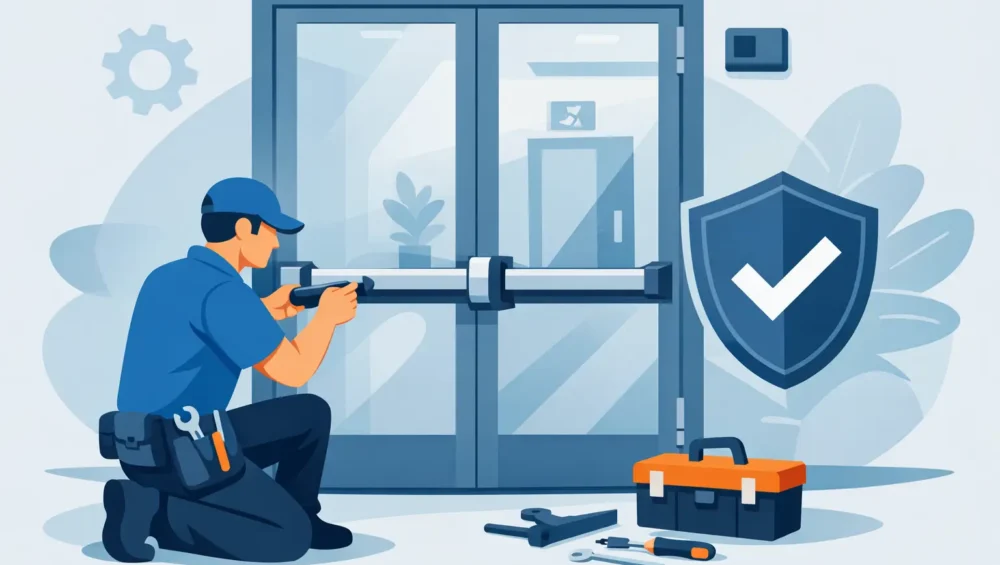
A proper service call should start with diagnosis, not guesswork. The technician should check how the door swings, how the latch meets the strike, whether the closer is controlling the door properly, and whether the push bar releases cleanly under normal pressure.
From there, the repair may include tightening and securing hardware, adjusting alignment, replacing worn internal parts, servicing latch components, correcting closer tension, or repairing related door issues that are contributing to the failure. If the device cannot be restored to dependable operation, replacement should be recommended clearly and honestly.
For DMV property owners, responsiveness is a big part of the value. When an exit device is failing on an active storefront or occupied building, you need a contractor who can show up, identify the issue, and get the door back into working order without dragging the problem out for days.
Freddy Glass & Doors handles door and glass issues with that same practical approach – fast response, professional workmanship, and repairs focused on safety, function, and long-term reliability.
How to protect your doors after push bar repair
Once the hardware is working again, a few basic habits can extend its life. Do not let doors slam uncontrolled. Do not prop them open in ways that twist the frame or stress the closer. If staff notices new stiffness, dragging, or failed latching, report it early instead of waiting for a complete breakdown.
It also helps to look at the whole opening, not just the bar. Hinges, closers, strikes, locks, storefront framing, and glass all affect how the door performs. A push bar can only work properly when the full system is aligned and moving the way it should.
For busy commercial properties, periodic door checks are worth it. They reduce emergency calls, support code-compliant operation, and help avoid the headache of finding out a critical exit door has failed at the worst possible time.
If your push bar is sticking, loose, or no longer latching the door the way it should, the safest move is to deal with it now while the fix is still straightforward.