
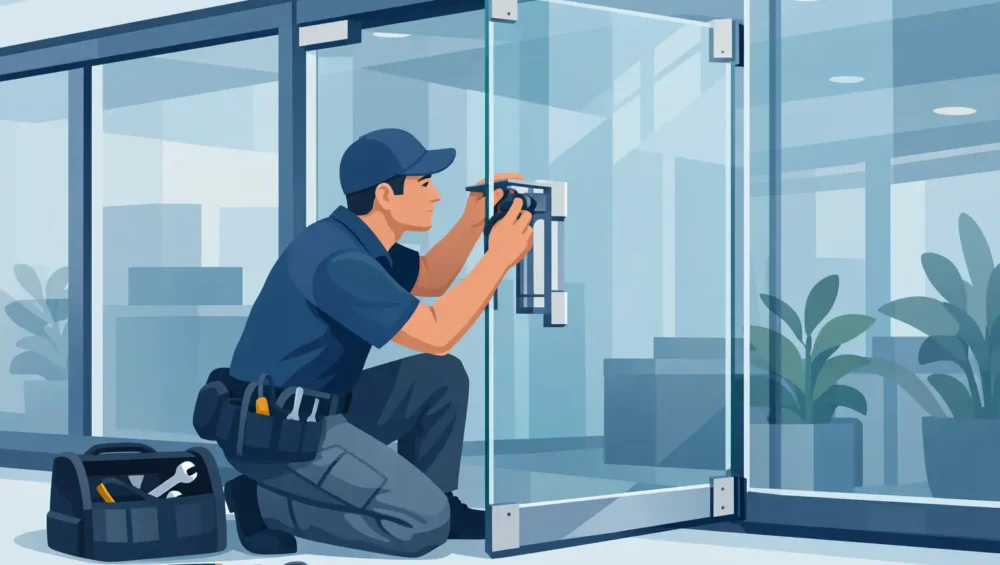
A herculite door that drags, slams, sticks, or won’t close cleanly does more than frustrate people coming through the entrance. It affects safety, security, appearance, and daily business flow. That is why herculite door repair should be handled quickly and correctly, especially in busy storefronts, offices, restaurants, and commercial buildings where the front door gets constant use.
These all-glass doors are built to look clean and modern, but they rely on precise hardware and proper alignment to work the way they should. When one part starts to fail, the problem usually spreads. A loose pivot can throw off the swing. A worn closer can make the door slam. A bad patch fitting can put stress on the glass. What starts as a minor issue can turn into a safety risk or a full door replacement if it is ignored for too long.
What makes herculite doors different
Herculite doors are frameless or nearly frameless tempered glass doors commonly used in commercial entries. They are popular because they create a bright, open look and give storefronts a professional finish. But the same design that makes them attractive also means repairs need a careful hand.
Unlike a standard hollow metal or aluminum door, a herculite door depends heavily on specialized hardware. The floor closer, top pivot, patch fittings, rails, locks, and handles all need to stay aligned. If one component shifts, the entire door can feel off. You may notice the glass rubbing, the lock no longer lining up, or the door hesitating before it closes.
That is why diagnosis matters. Two doors can show the same symptom for different reasons. A door that sticks might have a failing closer, worn pivot hardware, a settling frame, or damaged glass alignment. The right repair starts with figuring out what changed and what needs to be corrected now before more parts wear out.
Common signs you need herculite door repair
Most property owners do not call at the first squeak. They call when the door becomes hard to use, when customers complain, or when the entrance no longer feels secure. By that point, the issue has often been developing for a while.
One common sign is dragging. If the bottom edge is scraping the floor or threshold, the door may be sagging or the pivot may be out of alignment. Another frequent problem is slamming. That usually points to a floor closer that is no longer controlling the swing and close speed the way it should.
A door that will not latch properly is another red flag. In some cases, the lock body is fine, but the door has shifted enough that the hardware no longer lines up. You may also see loose handles, cracked patch fittings, a wobble at the top pivot, or visible movement where the door should feel solid.
Glass itself can also tell you something is wrong. Chips near hardware cutouts, stress marks, or cracks around patch fittings are serious. Tempered glass is strong, but when hardware is loose or misaligned, stress can build in the wrong place. At that point, repair may no longer be about function alone. It becomes a safety issue.
Why fast repair matters for commercial properties
In a commercial setting, the front door works all day. It handles foot traffic, deliveries, weather changes, and repeated opening and closing. When it is not operating properly, the impact is immediate.
A malfunctioning herculite door can create a poor first impression before anyone steps inside. It can also affect access control, energy efficiency, and after-hours security. If the door does not close fully, your interior climate is harder to maintain. If the lock is misaligned, your building may not be secure at the end of the day. If the swing is unpredictable, someone can get hurt.
For retail operators and office managers, there is also the practical side. You do not want staff propping open a broken door or explaining to customers why the main entrance sticks. Quick, professional service reduces downtime and helps avoid larger disruptions later.
Repair or replacement – it depends on the damage
Not every problem calls for a full replacement. In many cases, herculite door repair is the smart move because the glass panel is still in good condition and the issue is limited to hardware, alignment, or the closer system.
If the floor closer is worn out, replacing that component can restore proper movement. If the pivots are loose or the patch fittings need adjustment, a skilled technician can often bring the door back into alignment without changing the glass. Locks, handles, thresholds, and weather-related wear can also be addressed as part of a focused repair.
Replacement becomes more likely when the tempered glass is cracked, chipped in a critical area, or under visible stress around the hardware. The same is true when older doors have multiple failing parts at once. Sometimes the cost of repeated repairs starts to approach the value of replacing the door system and resetting the hardware correctly.
This is where experience matters. The cheapest immediate fix is not always the lowest long-term cost. A good service team will look at the condition of the glass, the age of the hardware, and how heavily the door is used before recommending the next step.
What professional herculite door repair usually includes
A proper repair visit should do more than tighten a few screws and hope for the best. The technician should inspect the full door assembly, including how the door swings, how it closes, how the lock engages, and whether the hardware is secure at every point.
That may include adjusting pivots, replacing worn patch fittings, servicing or replacing the floor closer, tightening handles, correcting alignment, and checking the surrounding entry condition. If the issue relates to the storefront framing or adjacent glass system, that should be identified too. On older entries, one problem can hide another.
For businesses, the goal is simple. The door should open smoothly, close under control, latch correctly, and feel secure every time someone uses it. Anything less leaves room for repeat problems.
Why DIY repairs usually make things worse
A herculite door looks simple from a distance, but the hardware setup is not forgiving. Small alignment errors can affect the whole door. Overtightening one fitting or forcing a panel back into place can put stress on tempered glass, and that is not a risk worth taking.
DIY attempts also tend to focus on the symptom instead of the cause. For example, if a door is slamming, someone may try to slow it manually or adjust the wrong component. If the root problem is a failing floor closer or bad pivot alignment, the door will keep acting up until the correct part is repaired or replaced.
For property managers and business owners, there is also liability to consider. An entrance door that injures someone because of an improper repair can create a much bigger problem than the original service call.
Choosing a local company for herculite door repair
When you need service, speed matters, but so does experience with commercial glass door systems. A local contractor should understand how to work with all-glass entries, diagnose hardware issues accurately, and handle urgent repairs without turning a small problem into a drawn-out process.
It also helps to work with a company that can support both emergency and scheduled service. Some problems cannot wait until next week. Others can be addressed as part of a planned property maintenance visit. Either way, clear communication, reliable scheduling, and quality workmanship matter just as much as the repair itself.
For building owners and businesses across the DMV, that means choosing a team that shows up prepared, respects the property, and gets the entrance working the way it should. Freddy Glass & Doors handles commercial glass and door issues with that practical, service-first approach.
Preventing repeat door problems
No commercial door lasts forever without wear, but repeat failures are often a sign that the underlying issue was never fully corrected. If your herculite door has needed multiple quick fixes in the same year, it is worth asking for a more complete inspection.
Routine adjustment can extend the life of the system, especially in high-traffic spaces. So can addressing small issues early. A slight drag, minor misalignment, or loose fitting may seem manageable now, but these are often the first warnings before a larger failure.
The best time to act is before the entrance stops working at the worst possible moment. If your glass door has started sticking, slamming, shifting, or refusing to lock properly, getting it checked now can save time, money, and a lot of unnecessary disruption later.