
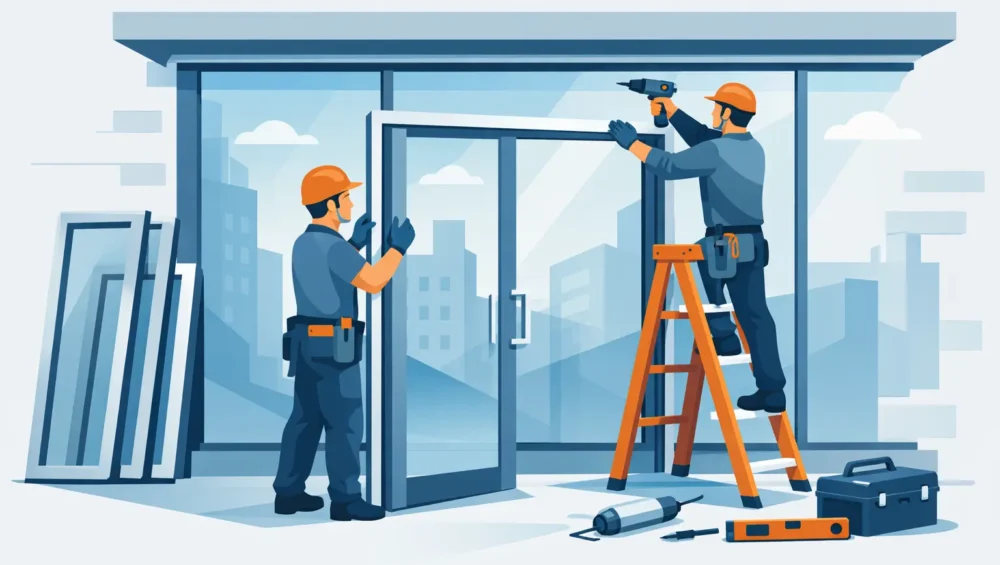
A crooked entry door, fogged glass, or a storefront that looks dated can cost you more than curb appeal. It can affect customer confidence, daily operations, and even security. That is why aluminum storefront installation is not just a construction detail – it is a business decision that needs to be handled correctly from the start.
For retail spaces, offices, restaurants, and mixed-use properties, the storefront is the first thing people see and the first thing they use. It has to look clean, open smoothly, hold up to traffic, and meet the needs of the space behind it. When installation is rushed or measured poorly, the problems show up fast. Doors drag, locks misalign, water gets in, and the whole front entry starts working against you instead of for you.
Why aluminum storefront installation is a smart choice
Aluminum storefront systems are popular for a reason. They give commercial properties a clean, professional appearance while supporting large glass panels and frequent daily use. They are commonly used for retail entrances, office fronts, restaurants, salons, medical offices, and service businesses because they balance strength, appearance, and practicality.
Compared with heavier framing options, aluminum offers a lighter structure that is easier to fabricate and customize. It also resists rust, which matters in areas exposed to moisture and changing weather. For many business owners and property managers, that means a storefront that stays functional and presentable with less ongoing trouble.
That said, the right system depends on the property. A small tenant suite in a shopping center may need a straightforward framed glass entry. A street-facing retail location may need stronger glass, upgraded hardware, or a layout that helps with visibility and traffic flow. Good installation starts with understanding how the space is used, not just filling an opening with glass and metal.
What aluminum storefront installation includes
Most people think of the storefront as the glass at the front of the business. In reality, the system includes much more. The aluminum framing, entrance doors, closers, thresholds, locks, glass type, and surrounding fit all have to work together.
A proper installation usually begins with field measurements and a site review. This step matters because commercial openings are not always perfectly square, especially in older buildings or spaces that have been renovated more than once. Even a small measurement error can create problems with door swing, weather protection, and hardware alignment.
From there, the system is fabricated to match the opening and project requirements. Some storefronts are designed for standard use, while others need tempered glass, insulated glass, ADA-conscious entry hardware, panic devices, or stronger security features. The installer also has to account for drainage, anchoring, sealants, and transitions to the surrounding walls.
If the project is a replacement rather than a first-time build-out, removal becomes part of the job too. That means taking out old framing and glass carefully, protecting the surrounding area, and preparing the opening so the new system can be set correctly. This is one place where experience makes a difference. Fast work is helpful, but clean and accurate work is what prevents callbacks.
The details that make or break the job
Storefront installation looks simple from the sidewalk. It is not. The quality of the finished result depends on dozens of small choices that most customers should not have to worry about, but the contractor absolutely should.
Door alignment is a major one. A storefront entry door gets constant use, so even a slight issue with plumb or hardware placement will show up quickly. If the door does not close right, latch right, or sit properly in the frame, you end up with security concerns and a poor customer experience.
Water management is another. A storefront should not allow water intrusion around the frame, threshold, or glass stops. Proper sealing and installation methods matter, especially in the DMV where rain, humidity, and seasonal changes can expose weak work fast.
Then there is glass selection. Clear glass may be the obvious choice for visibility, but it is not always the only one that makes sense. Some locations benefit from insulated glass for better energy performance. Others may need safety glazing, tinted options, or different thicknesses based on exposure and use. There is no one-size-fits-all answer here.
When replacement makes more sense than repair
Not every storefront problem requires a full replacement. In some cases, replacing a broken glass panel, adjusting a door, or updating hardware is enough to get the entry back in working order. That is often the smarter move when the frame is still sound and the issue is isolated.
But there are times when aluminum storefront installation is the better long-term fix. If the frame is damaged, the door is consistently failing, the system is outdated, or multiple parts are wearing out at once, repairs can start to stack up without solving the bigger problem. A new installation can improve appearance, reliability, and function in one project instead of stretching the problem out.
This is especially true for businesses preparing for a tenant improvement, rebrand, or property upgrade. A fresh storefront can change how the space feels from the street and how it performs every day. It can also help create a cleaner handoff between landlord responsibilities, tenant needs, and code-related requirements.
What affects project cost and timeline
Customers often want a simple flat number, but storefront pricing depends on the opening size, glass type, door count, hardware, finish, and site conditions. A single entrance with fixed glass panels is different from a larger multi-panel front with specialty hardware and custom fabrication.
Timeline depends on those same factors. If the opening is standard and the materials are readily available, the process can move faster. If the project involves custom sizing, permitting, coordination with other trades, or replacement in an occupied commercial setting, it may take more planning.
Access also matters. A first-floor storefront with open working space is easier to handle than a tight site with active foot traffic, limited loading access, or business-hour restrictions. The goal is not just to install the system quickly. It is to install it with minimal disruption and no shortcuts.
Choosing the right contractor for aluminum storefront installation
This is where many projects go wrong. A storefront is not just glass work, and it is not just door work. It requires accurate measuring, fabrication coordination, commercial hardware knowledge, and installation practices that hold up under use.
The right contractor should be able to explain what system fits the property, what glass and hardware options make sense, and what trade-offs come with each choice. They should also communicate clearly about scheduling, access, and what happens if the existing opening has hidden issues once removal begins.
For property managers and business owners in the DMV, responsiveness matters just as much as skill. Delays at the front of the building can delay inspections, push back openings, and frustrate tenants. Working with a local company that handles both urgent service and planned installations can make the process much easier, especially when there are related door or glass issues that need attention at the same time.
Freddy Glass & Doors serves customers who need that kind of practical support – fast response, professional installation, and clear communication from start to finish.
How to prepare for a storefront project
A little planning can save time once the work begins. Before installation starts, it helps to know how the front entry is used each day, whether the business needs to stay open during the work, and whether any security or access concerns need to be addressed in advance.
If the storefront is being replaced after damage, temporary protection may be part of the plan. If it is part of a renovation, the installer may need to coordinate around flooring, electrical work, signage, or adjacent wall finishes. The cleaner the communication upfront, the smoother the job usually goes.
It also helps to think beyond the frame itself. Are you trying to improve appearance, fix recurring door problems, increase security, or update an outdated front? The answer affects what kind of system makes sense. A good contractor will not push the same setup for every property because different spaces have different priorities.
A storefront should work as hard as your business
Your storefront is not just an entrance. It is part of your security, your presentation, and your day-to-day operation. When it is built and installed correctly, it supports the business without drawing attention to itself. Customers walk in easily, staff can rely on it, and the property looks ready for business.
If you are planning aluminum storefront installation, the best next step is to treat it like an investment in function as much as appearance. The right system, installed the right way, gives you fewer problems later and a front entry that does its job every single day.