
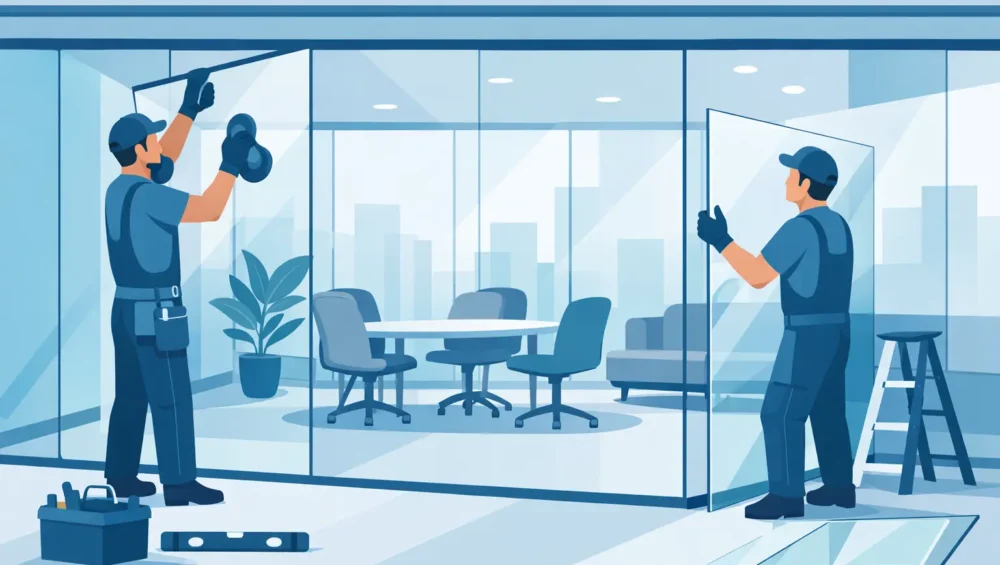
A glass wall can fix two problems at once. It can divide a space without making it feel smaller, and it can give a home or business a cleaner, more finished look. That is why glass partition installation has become a popular choice for offices, retail spaces, entryways, clinics, and even certain residential interiors across the DMV.
The catch is simple – not every partition should be built the same way. The right setup depends on how the space is used, how much privacy you need, and how much daily traffic the glass will handle. A good installation does more than look sharp on day one. It needs to work safely, hold up over time, and fit the way people move through the property.
Why glass partition installation works in so many spaces
Traditional walls solve privacy, but they also block light and can make rooms feel closed off. Glass partitions create separation while keeping visibility and openness. That matters in office suites where teams need breakout areas, in storefronts where presentation counts, and in homes where owners want a modern layout without a full remodel.
For commercial properties, glass often supports both function and appearance. A reception area can feel more professional. A conference room can stay bright. A waiting room can feel cleaner and more organized. In retail settings, partitions can guide customer flow without creating a heavy barrier.
In residential settings, glass partitions are often used to define a home office, divide a basement area, section off a bathroom, or create a modern interior transition. They work especially well where natural light is limited and every bit of openness matters.
Choosing the right type of glass partition installation
The best partition is the one that matches the job. Clear glass is the obvious choice when visibility and light are the priority. Frosted or tinted glass makes more sense when privacy matters, such as in conference areas, treatment rooms, or certain parts of a home.
Framed systems offer a little more structure and can be a practical fit for high-traffic commercial environments. Frameless systems usually create the most modern appearance, but they require careful measurement and skilled installation to look right and perform well. Sliding options can help when swing space is limited, while fixed panels may be all that is needed to divide one area from another.
This is where many property owners make a mistake. They choose based on photos instead of use. A partition that looks great online may not be the right answer for a busy office corridor, a tenant build-out, or a family space with kids and pets. Hardware, panel thickness, glass type, and door function all matter.
Privacy, safety, and code considerations
Privacy is not the same as sound control. Glass can create a visual barrier, but if you need serious acoustic separation, that should be discussed before the work starts. Some systems perform better than others, and expectations should be realistic.
Safety matters just as much. Most interior partition systems use tempered or laminated safety glass, depending on the application and code requirements. Door locations, panel height, and proximity to traffic all affect what should be installed. In commercial settings, local code and accessibility requirements also come into play. This is not a detail to leave until the end.
What to expect during the installation process
A professional glass partition installation starts well before the glass arrives. First comes the site visit and measurement. Floors, walls, ceilings, and openings are checked to confirm dimensions and identify any conditions that could affect the fit. In older buildings, surfaces are not always level or square, which can change the plan.
After that, the design and materials are finalized. This includes the glass type, hardware finish, framing style if any, door configuration, and any privacy treatment. Once fabrication begins, accuracy is everything. Glass is not forgiving. If measurements are off, delays follow.
Installation day typically involves preparing the area, setting tracks or channels if required, placing the glass panels, securing hardware, aligning doors, and checking operation. A well-installed partition should feel solid, open and close properly if it includes a door, and sit cleanly within the space. There should be no rattling, uneven gaps, or awkward alignment.
For business owners and property managers, scheduling matters. Work may need to be coordinated around operating hours, other trades, tenant access, or building rules. That is one reason experience matters. A contractor who handles both residential and commercial work is usually better prepared for real-world site conditions and timing issues.
Common issues that can affect glass partition installation
The biggest problems usually start before installation, not during it. Inaccurate measurements, poor planning, and unclear expectations cause more headaches than the glass itself. If the floor slopes, if the wall is out of plumb, or if surrounding finishes are incomplete, the final result can suffer.
There is also the question of structure. Some partitions are decorative, while others need stronger support because of their size or door hardware. If a heavy glass door is part of the design, the mounting surfaces must be able to handle that load. Skipping that review can lead to performance problems later.
Another issue is choosing style over maintenance. Clear glass looks crisp, but fingerprints and smudges show quickly in high-touch areas. Frosted surfaces can offer a little more forgiveness. Certain hardware finishes also wear better than others depending on the environment. A busy office, a medical setting, and a private home do not all have the same maintenance demands.
Cost depends on more than panel size
Customers often ask for a quick price based on width and height, but the final cost of glass partition installation depends on several moving parts. Glass type, thickness, framing, door hardware, privacy film, site conditions, and labor access all affect the number.
A simple fixed partition is usually more straightforward than a custom system with doors, corner panels, and specialty hardware. Commercial jobs may also involve permit requirements, after-hours scheduling, and coordination with building management. That does not mean the project has to be complicated. It just means the quote should reflect the real scope of work.
The best approach is to think beyond initial price. If the partition is installed correctly with the right materials, it should perform well for years. Fixing a poor installation later usually costs more than doing it right the first time.
Where glass partitions add the most value
Office interiors are one of the strongest use cases because glass helps create private work zones without making the floor plan feel boxed in. Conference rooms, manager offices, and reception partitions are common choices. They support a professional look while keeping the workplace bright.
Retail and service businesses also benefit. Salons, clinics, showrooms, and customer service areas often need separation, but not a heavy visual barrier. Glass keeps the space feeling open and polished, which can influence how customers perceive the business.
In homes, value often comes from flexibility. A den can become a more defined office. A loft can gain separation without losing light. A bathroom or dressing area can feel more custom. These upgrades are practical, but they also improve the overall finish of the interior.
For property managers, glass partitions can be a smart improvement because they modernize a suite without a full rebuild. That can help with leasing, tenant satisfaction, and overall presentation.
Why professional installation matters
Glass looks simple when it is finished. Getting there is not. The margins are tight, the materials are specialized, and the installation has to be precise. A rushed job can leave you with alignment issues, unsafe conditions, or a system that never quite feels right.
Professional installers know how to measure accurately, account for field conditions, choose the right safety glass, and mount hardware so it performs correctly. They also know when a design needs to be adjusted before fabrication instead of after a problem shows up on site.
That is especially important for businesses that cannot afford delays and homeowners who want the project handled without back-and-forth. A dependable local contractor should be able to guide the job from quote to final installation with clear communication and solid workmanship. That is the standard Freddy Glass & Doors brings to every project.
If you are considering a glass partition, the best next step is to look at the space the way it is actually used, not just how you want it to look. When the design fits the day-to-day function, the finished result feels right the moment it is installed.