
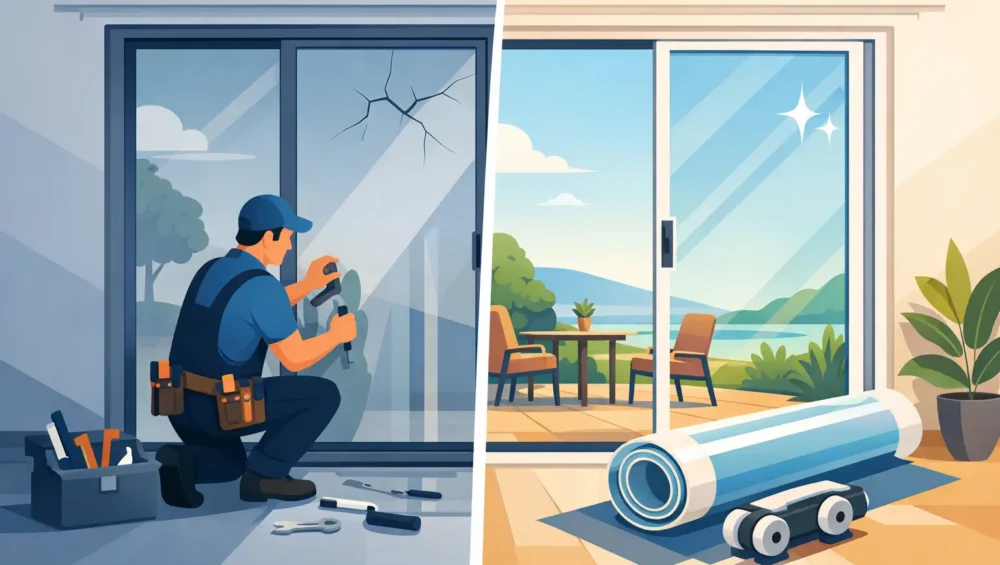
A sliding door that drags, rattles, or refuses to lock is more than an annoyance. Sliding glass doors affect security, energy efficiency, daily comfort, and the way a home or storefront looks and functions. When they start failing, most property owners ask the same question – is this a quick repair, or is it time for a full replacement?
The answer depends on what is actually wrong with the door. Some problems are minor and can be fixed fast. Others point to worn-out hardware, damaged frames, failed glass, or installation issues that keep causing the same trouble. Knowing the difference helps you avoid wasting money on short-term fixes when a better long-term solution is available.
What goes wrong with sliding glass doors
Most sliding door issues start small. The door may feel heavier than usual, make a grinding sound, or stop gliding smoothly along the track. In many cases, that points to worn rollers, dirt buildup, bent tracks, or alignment problems. These are common service calls because they make the door harder to use every day, even if the glass itself still looks fine.
Locks are another frequent problem. A sliding door that does not latch properly can leave a home or business vulnerable. Sometimes the lock is worn out. In other cases, the panels are misaligned, so the lock cannot engage the way it should. That distinction matters because replacing a lock alone will not solve a door that is sitting out of position.
Glass damage is a separate issue. A cracked pane, fogging between insulated glass panels, or visible chips around the edge all deserve prompt attention. Even minor glass damage can spread, especially in high-traffic areas or during temperature swings. For commercial properties, damaged door glass also affects appearance and customer confidence.
Water intrusion and drafts often get overlooked until they become expensive. If you feel air around the frame, see moisture near the track, or notice rising utility bills, the door may have worn seals, poor installation, or frame damage. Repair may be possible, but repeated leaking usually means there is a deeper problem that needs a more complete fix.
When sliding glass door repair makes sense
Repair is often the right move when the core structure of the door is still in good condition. If the frame is solid, the glass is intact or replaceable, and the system is not badly warped, targeted repairs can restore performance without the cost of a full new unit.
Roller replacement is one of the best examples. When rollers wear down, doors become hard to open and can start scraping the track. Replacing the rollers can make a dramatic difference, especially if the issue is caught before track damage gets worse.
Track repair may also be worthwhile if the damage is limited. A bent or worn track can interfere with movement, but not every track issue calls for replacing the entire door. The same goes for handles, locks, guides, and weatherstripping. These parts wear out with use, and replacing them can extend the life of the door.
Glass-only replacement is another practical option in many situations. If the frame and sliding mechanism are still working well, replacing damaged glass can restore safety and appearance without removing the full door assembly. That can be especially useful for homeowners who want to keep the existing style or for commercial properties trying to minimize disruption.
Repair tends to be the smarter choice when the problem is isolated, the door is not too old, and the fix addresses the actual cause – not just the symptom.
When replacement is the better investment
There comes a point when repeated repairs stop making financial sense. If a sliding door has multiple failing parts at once, replacement may save time, frustration, and money over the long run.
Frame damage is a major warning sign. If the frame is warped, rotted, corroded, or pulling away from the opening, the problem goes beyond rollers or locks. A compromised frame affects alignment, weather resistance, and security. In those cases, a patch job may only delay a larger issue.
Older doors also create a different kind of cost. Many outdated sliding systems are less energy efficient, harder to secure, and more difficult to service because replacement parts may be limited. If the glass has lost insulation value, the hardware keeps failing, and the door still performs poorly after service, replacement usually delivers better results.
For businesses, appearance and operation matter just as much as cost. A storefront or office entry with damaged or outdated sliding glass doors can create a poor first impression and disrupt daily traffic flow. If the door is part of a customer-facing space, replacement may be the faster path to a cleaner, more reliable system.
Homeowners often choose replacement during remodels for similar reasons. If the goal is to improve natural light, update the look of a room, or create smoother access to a patio or backyard, a new sliding door can solve existing problems and improve the space at the same time.
Key factors that affect the decision
The age of the door matters, but age alone does not decide it. A well-installed door with quality materials may still be worth repairing after many years. A newer door that was installed poorly may already need major correction. What matters most is condition, not just the date it was put in.
The extent of damage also changes the equation. One failed part is usually a repair. Several failing parts plus visible wear across the system often point toward replacement. If you are paying for service every few months, that pattern is worth paying attention to.
Budget is part of the conversation, but it should be looked at carefully. The cheapest immediate option is not always the lowest total cost. A lower repair bill can feel like a win until the same door starts sticking again, the lock fails again, or moisture returns around the frame.
Timing matters too. If the issue affects security, weather exposure, or safe access, waiting can make the job more expensive. A cracked panel, broken lock, or door that no longer closes properly should be addressed quickly, especially in occupied homes or active commercial spaces.
What property owners in the DMV should expect
In the DMV, sliding doors deal with hot summers, cold winters, humidity, storms, and heavy day-to-day use. Those conditions can wear down seals, tracks, rollers, and insulated glass over time. That is why local service matters. A proper evaluation should look at how the door operates, how the frame is holding up, whether the glass is still performing, and whether repair will actually last.
For residential customers, that means getting a clear answer on safety, energy efficiency, and ease of use. For commercial customers, it also means minimizing downtime and protecting the property if there is broken glass or a security issue. In urgent cases, fast response is not just convenient – it protects the building.
This is where working with an experienced local contractor makes a difference. A company like Freddy Glass & Doors understands that some calls are planned upgrades and some are immediate problems that cannot wait until next week. The right approach is not pushing replacement every time. It is identifying the most reliable fix for the property, the budget, and the timeline.
How to know your next step
If your sliding door has become difficult to open, does not lock properly, lets in air or water, or has damaged glass, do not assume it needs to be replaced right away. But do not ignore it either. Sliding door problems usually get worse with use, and what starts as a hardware issue can turn into glass, frame, or security damage if it is left alone.
A professional inspection can usually tell you quickly whether the door is a strong candidate for repair or whether replacement would be the smarter investment. The key is getting an honest assessment based on condition and performance, not guesswork.
A good sliding door should open smoothly, close securely, and hold up to daily use without becoming a constant problem. If yours is falling short, the best next move is simple – fix it before a small issue becomes a bigger one.