
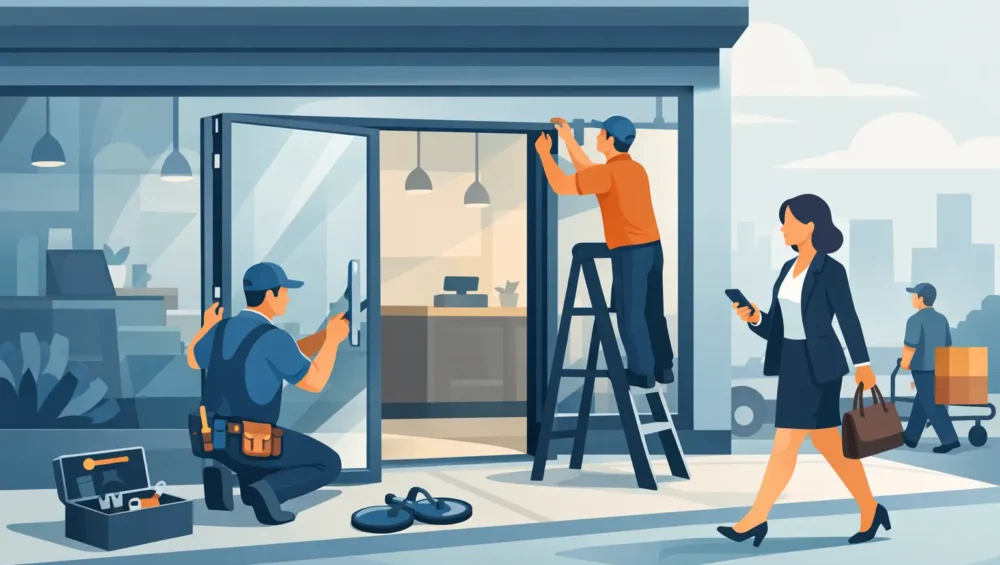
A storefront door rarely fails at a convenient time. It sticks when customers are walking in, slams when employees are carrying product, or stops latching right as you lock up for the night. When that happens, storefront door repair becomes more than a maintenance task – it becomes a business issue that affects safety, security, appearance, and daily operations.
For retail stores, offices, restaurants, and mixed-use properties across the DMV, a damaged entry door sends the wrong message fast. It can make your property look neglected, create a safety risk, and turn a simple opening-and-closing problem into a full shutdown if the door no longer works as it should. The good news is that many storefront door problems can be fixed quickly when the right team handles them early.
Why storefront door repair matters sooner than most owners think
A commercial storefront door takes a beating. It deals with constant foot traffic, changing temperatures, hard pulls, rushed closings, delivery carts, and occasional impact. Over time, hardware loosens, pivots wear down, closers lose control, and aluminum frames shift just enough to create bigger issues.
What starts as a minor annoyance often turns into a more expensive repair. A door that drags across the threshold can damage the bottom rail. A closer that no longer controls movement can stress hinges and pivots. A lock that does not line up properly can leave your business unsecured even when the door looks closed.
There is also the customer side of the problem. If your front door is difficult to open, wonky, loud, or visibly damaged, people notice. For a storefront, your entrance is part of the customer experience. A clean, properly working glass door tells people your business is open, safe, and cared for. A broken one does the opposite.
Common signs you need storefront door repair
Some issues are obvious. Others build slowly until staff starts compensating for them without realizing how bad the door has become.
The door is hard to open or close
This is one of the most common service calls. If a storefront door sticks, drags, or needs extra force, the cause may be a misaligned frame, worn pivot, failing closer, damaged threshold, or loose hardware. It depends on how the door was installed and what kind of wear it has seen.
The door does not latch properly
If the latch misses, catches, or only works when someone pushes the door a certain way, the opening is no longer aligned correctly. That can leave your business vulnerable after hours and create frustration during the day.
The glass is cracked, chipped, or loose
Damaged glass should never be ignored. Even a small crack can spread, especially on a high-use commercial entrance. If the glass panel feels loose or the glazing is failing, that is a safety problem and needs prompt attention.
The closer is leaking or slamming
When a door closer leaks oil, loses resistance, or stops controlling movement, the door may swing too fast or fail to close fully. That puts extra stress on the rest of the system and creates a hazard for customers and employees.
The frame or rails are bent or damaged
Aluminum storefront systems are durable, but they are not immune to impact. Carts, equipment, break-in attempts, and accidents can bend rails or throw the entire door out of alignment. In some cases, repair is straightforward. In others, replacement of specific components makes more sense.
What can usually be repaired
Many business owners assume a bad storefront door needs full replacement. Sometimes that is true, but often it is not. A professional inspection can identify whether the problem is isolated to hardware, glass, alignment, or structural damage.
In many cases, storefront door repair involves replacing pivots, adjusting the closer, resetting alignment, repairing the lock or panic hardware, replacing damaged glass, or addressing worn weatherstripping and thresholds. If the frame is still structurally sound, repair can restore proper function without the cost of a full new system.
That said, there are trade-offs. If the door has been repaired multiple times, if several parts are failing at once, or if the frame itself is compromised, a repair may only buy limited time. For busy commercial properties, a short-term patch is not always the most cost-effective move.
Repair or replace? It depends on the door and the damage
This is where experience matters. The right answer is not always the cheapest immediate fix, and it is not always full replacement either.
If your door has isolated hardware failure and the glass and frame are in good condition, repair is usually the right call. It is faster, less disruptive, and more affordable. If the issue is a closer, pivot, lock, or alignment problem, those are often very repairable.
If the glass is shattered, the aluminum is twisted, the frame is pulling loose, or the system no longer meets the needs of the space, replacement may be the smarter investment. The same goes for older doors with recurring issues that interrupt business every few months.
A good contractor will tell you which option solves the problem best, not just which one creates the biggest invoice.
Storefront door repair and emergency situations
Not every service call can wait for normal business hours. A break-in, impact damage, shattered glass panel, or door that will not lock is an urgent security problem. In those situations, fast response matters.
Emergency storefront door repair may involve immediate board-up, glass cleanup, securing the opening, temporary hardware stabilization, and follow-up replacement or permanent repair once materials are ready. For business owners and property managers, that kind of response can make the difference between a contained incident and a much bigger loss.
This is especially important in high-traffic retail areas and office corridors where an unsecured opening creates liability. If the door cannot protect the property, the problem needs attention right away.
What to expect from a professional repair visit
A solid repair service should start with a clear diagnosis. That means checking the full door system, not just the most obvious symptom. A sticking door, for example, may not be caused by the threshold at all. It may be a failing closer or worn pivot causing the slab to shift.
From there, the technician should explain what is wrong, what can be repaired on site, and whether any replacement parts are needed. For commercial clients, speed matters, but so does clarity. You should know whether the repair is expected to hold long term or whether the door is showing signs of broader system failure.
At Freddy Glass & Doors, that service-first approach matters because business owners do not have time for vague answers or repeat problems. They need the door fixed correctly, with as little disruption as possible.
How to reduce future storefront door problems
No commercial door lasts forever, but routine attention can prevent a lot of disruption. Doors that are checked early tend to avoid the larger failures that shut down entrances and create emergency calls.
If staff notices the door is dragging, slamming, wobbling, or not latching right, it should be addressed early rather than worked around. Small adjustments and part replacements are usually easier than repairing a door after weeks of strain.
It also helps to keep the entrance area clean and free of debris at the threshold. Dirt, trapped gravel, and moisture can affect how the door moves and wears over time. For high-traffic businesses, periodic inspections are a smart move, especially before seasonal temperature swings when alignment issues often become more noticeable.
Choosing the right team for storefront door repair
Commercial entry systems are not the place for guesswork. A storefront door is part glass, part metal system, part hardware package, and part security point. If one part is off, the whole opening can suffer.
That is why it helps to work with a local company that understands both glass and commercial door systems, not just one or the other. In the DMV, property owners often need a team that can handle urgent repairs, replacement glass, hardware issues, and full storefront system work without sending them to multiple vendors.
Responsiveness matters too. If your front door is not working, you do not want to wait days just to get an answer. You want a contractor who shows up, communicates clearly, and treats the repair like the business priority it is.
A failing storefront door has a way of affecting more than the entrance. It impacts security, first impressions, and the pace of your day. Fixing it quickly is not just about the door – it is about keeping your property safe, your staff productive, and your business open the way it should be.