
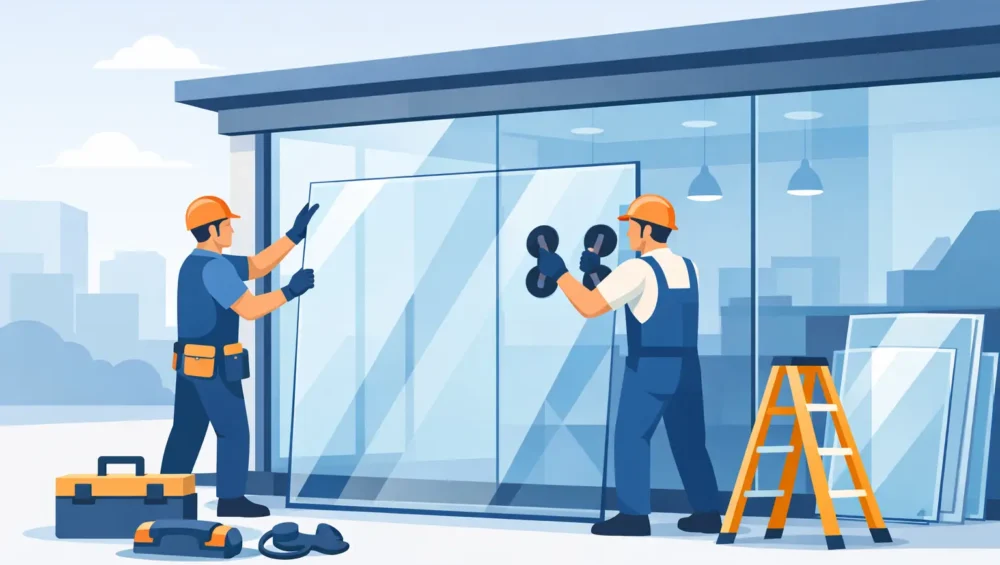
A cracked front pane, a sticking entry door, or fogged glass across your retail frontage does more than hurt appearance. It changes how customers see your business before they ever walk in. Storefront glass installation is not just a finish detail – it affects security, visibility, energy performance, and how smoothly your space works every day.
For business owners and property managers in the DMV, that usually means one thing: you need the job handled quickly, correctly, and with as little disruption as possible. Whether you are building out a new tenant space, replacing damaged glass, or upgrading an older storefront system, the right installation protects your property and keeps your business looking ready for customers.
What storefront glass installation really includes
Many people picture storefront glass as one large pane at the front of a business. In practice, the system is more involved. A storefront usually includes fixed glass, entry doors, aluminum framing, hardware, closers, thresholds, and surrounding seals that all have to work together.
That matters because the problem you see is not always the only problem present. A cracked lite may be the obvious issue, but the root cause might be a shifted frame, worn door hardware, poor alignment, or damage around the opening. If those issues are missed, new glass can end up under stress and fail sooner than expected.
In some projects, the best solution is a simple glass replacement within the existing frame. In others, a full storefront system replacement makes more sense, especially when the frame is bent, outdated, leaking, or no longer operating safely. The right choice depends on the condition of the opening, the age of the system, the building requirements, and your timeline.
When it is time to replace or upgrade
Some storefront issues are obvious. Shattered glass, active leaks, or a door that will not close properly need attention right away. Other signs are easier to overlook because they build gradually over time.
If your storefront looks cloudy, drafts are coming in near the entrance, or customers struggle with the front door, those are signs the system may be underperforming. Loose handles, failing closers, and gaps around the frame can also point to a larger issue. For retail locations and office entrances, these problems affect both safety and first impressions.
There is also the appearance factor. Older storefronts can make an otherwise well-run business look neglected. A clean, updated glass front improves visibility from the street and gives the property a more professional look. For some owners, that is the main reason to upgrade. For others, it is about reducing recurring repair calls. Often, it is both.
Storefront glass installation for new build-outs and renovations
When a commercial space is being renovated or prepared for a new tenant, storefront glass installation often becomes part of a larger schedule with several moving pieces. Framing, doors, glazing, hardware, inspections, and finish work all need to line up.
This is where experience matters. A storefront opening has to be measured carefully and installed with attention to fit, level, and daily use. If the system is off even slightly, the effects show up fast: doors drag, locks stop lining up, weather resistance suffers, and glass stress increases.
For retail operators, restaurants, offices, and mixed-use properties, timing can be just as important as the installation itself. Delays at the storefront can hold up occupancy, inspections, merchandising, and opening day plans. A responsive contractor helps keep the project moving instead of becoming the reason it stalls.
Why material and glass choices matter
Not every storefront uses the same type of glass or framing setup. The right combination depends on the building, the use of the space, and the performance you need.
Tempered safety glass is common in many commercial applications because it is designed to break into smaller pieces rather than dangerous shards. Insulated glass can help with energy efficiency and comfort, especially in storefronts exposed to strong sun or seasonal temperature swings. Some businesses also choose tinted or low-reflective options based on privacy, heat gain, or appearance.
Framing choices matter too. Aluminum storefront systems are popular because they are durable, clean-looking, and practical for a wide range of commercial properties. But even a strong frame has to be installed properly to perform well over time. The best material on paper will not solve poor measurements, weak anchoring, or misaligned hardware.
That is why the installation process deserves as much attention as the glass selection itself. A good recommendation should match the property, not just the parts that are easiest to order.
The biggest mistakes to avoid
One of the most common mistakes in storefront work is treating it like a basic glass swap when the opening has structural or alignment issues. That can lead to repeat cracks, water intrusion, and doors that never operate quite right.
Another mistake is waiting too long after damage happens. Even small cracks can spread quickly with temperature changes, door vibration, or wind pressure. If the damage affects a ground-level business front, it can also create a security concern and a poor message to customers passing by.
There is also a tendency to focus only on upfront cost. Price matters, but the cheapest option is not always the lowest-cost decision over time. If inferior materials or rushed labor lead to another service call in a few months, the savings disappear fast. For occupied commercial properties, downtime has a cost too.
What to expect during storefront glass installation
A professional installation starts with a site review and accurate field measurements. The opening, frame condition, door operation, and glass requirements all need to be checked before fabrication or replacement begins.
From there, the work may involve removing broken or outdated glass, repairing or replacing damaged framing components, setting new glass, adjusting the door system, and sealing the assembly against weather and movement. On a full replacement, the old storefront system may come out entirely before the new frame and glazing are installed.
The timeline depends on the size of the job and whether custom materials are needed. Emergency situations are different from planned improvements. If a storefront is broken after impact or vandalism, temporary board-up may be the immediate step to secure the opening until permanent glass can be installed.
Good communication matters throughout the process. Business owners and managers should know what is being replaced, how long the work will take, and whether the entrance will remain usable during installation. Clear expectations reduce stress and help you plan around customers, staff, and tenants.
Choosing a contractor for storefront glass installation
Commercial glass work is not something most owners want to redo. The safer move is to hire a contractor who understands both the glass and the day-to-day realities of occupied properties.
Look for a company that is insured, experienced with commercial systems, and able to respond quickly when a job is urgent. Ask practical questions. Will they inspect the frame and hardware, not just the broken pane? Can they handle emergency board-up if the opening is exposed? Do they stand behind their labor? Those details tell you a lot about the service you will receive.
Local coverage matters as well. In the DMV, response time can make a real difference for retail stores, office buildings, and managed properties that cannot afford long delays. A contractor serving Virginia, Washington, DC, and nearby areas should be prepared for both scheduled installations and last-minute calls.
That service model is where a company like Freddy Glass & Doors can make the process easier. When one team can handle storefront systems, door issues, emergency protection, and follow-up repairs, you spend less time coordinating multiple vendors and more time keeping the property running.
A storefront should work as hard as your business
Your storefront is not just the front of the building. It is part of security, branding, access, and daily function. When the glass is damaged, outdated, or poorly fitted, customers notice and operations feel it.
The right storefront glass installation gives you more than a cleaner look. It gives you a safer entrance, smoother door performance, and a stronger first impression for every person who walks up to your property. If your storefront has been causing problems or simply no longer reflects the business inside, taking care of it now can prevent bigger headaches later.