
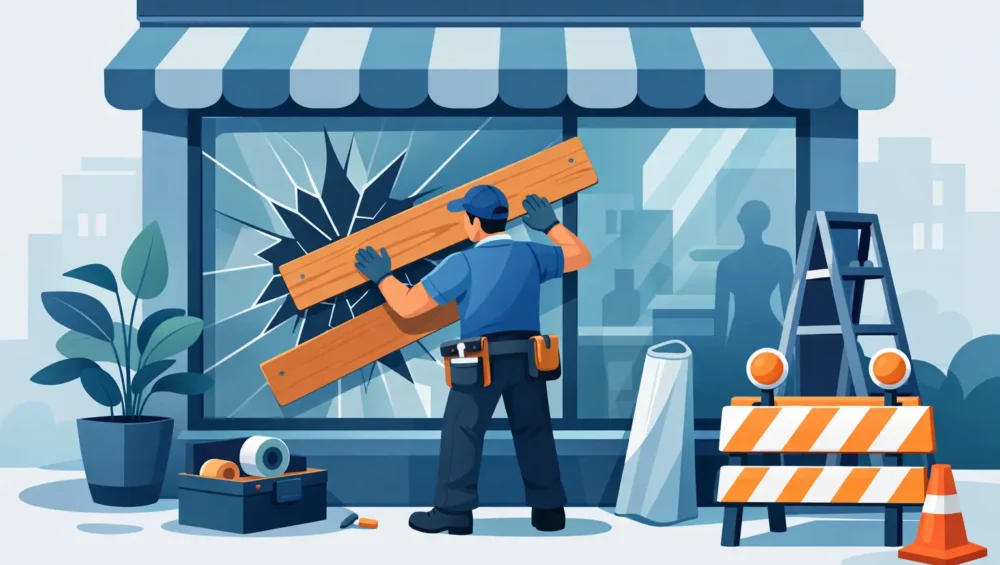
A cracked storefront can turn into a business emergency in minutes. One impact, one failed panel, or one forced entry attempt is all it takes to leave your entrance exposed, unsafe, and vulnerable to weather, theft, and liability. If you are searching for how to secure broken storefront glass, the goal is simple – protect people first, stabilize the opening, and move quickly toward a proper repair.
How to Secure Broken Storefront Glass Without Making It Worse
The first step is to treat the area like a safety hazard, not a cleanup project. Broken storefront glass can keep shifting after the initial damage, especially in aluminum frames, entry systems, and large commercial panels. What looks stable from a few feet away may still be under tension.
Keep customers, staff, and passersby away from the opening right away. If the damage is near an entrance, lock the door if possible and redirect foot traffic to another access point. For retail spaces, restaurants, offices, and mixed-use buildings, this matters as much for liability as it does for safety. Even a small pile of broken tempered glass can create slip and cut hazards if people keep walking through the area.
If glass is still hanging in the frame, do not push on it, tape over it as a fix, or try to knock it loose. That can turn partial damage into a full collapse. In many storefront systems, the issue is not just the glass itself. Stops, rails, door closers, pivots, and surrounding aluminum can also be affected.
A smart immediate response usually includes isolating the area, securing access, and calling for emergency board-up or glass service. If your business operates in the DMV, a local contractor that handles both emergency protection and full replacement can save you time because you will not need to coordinate two separate companies.
What to Do in the First 30 Minutes
The first half hour after storefront glass breaks is about control. Move fast, but do not rush into the wrong fix.
Start by checking whether anyone is hurt. If there are injuries, handle that first. Once people are safe, block the area with whatever clear barriers you have on hand, such as cones, caution tape, stanchions, or temporary signage. If the storefront is street-facing, make sure pedestrians can see the hazard before they get close to it.
Next, look at the type of damage. A fully shattered panel with an open hole needs a different response than a cracked but intact lite. A broken storefront door is also different from a fixed sidelight or large display window. If the damage affects an active entrance, your building may no longer be secure even if the opening looks partially closed.
Take a few photos for documentation before cleanup or board-up starts. Property managers and business owners often need these for insurance, incident reports, or landlord communication. Clear photos of the frame, glass, surrounding door hardware, and any visible impact point can help speed up next steps.
After that, contact a qualified commercial glass company. Emergency board-up is often the safest move when same-day glass replacement is not possible. The point is not to make the storefront look finished. The point is to make it secure, weather-resistant, and difficult to access until the right glass is installed.
Temporary Protection Options That Actually Help
When people think about how to secure broken storefront glass, they often picture plywood first. In many cases, that is the right call. But the quality of the board-up matters.
A proper temporary board-up should be fitted securely to the opening, attached in a way that protects the frame as much as possible, and installed to reduce movement, drafts, and unauthorized entry. Loose panels, poorly placed screws, or badly measured boards can create a second problem instead of solving the first.
For some commercial openings, temporary safety film or controlled stabilization may help if the glass is cracked but still intact. That depends on the damage pattern, the size of the panel, and whether the system is a door or fixed storefront glass. Film is not a replacement for repair, and it is not the answer for every break. If the panel has failed structurally, a full board-up is usually the safer option.
The real trade-off is speed versus appearance. A fast emergency board-up protects your property right away, but it is still temporary. If your storefront is customer-facing, you will want a replacement plan in motion as soon as the opening is secure.
What Not to Do After Storefront Glass Breaks
Trying to save money with a DIY fix can cost more if it delays proper service or causes additional damage. Storefront systems are not the same as residential windows, and large commercial glass panels come with higher safety and code concerns.
Do not leave shattered glass in the frame and hope it holds until morning. Do not rely on household tape, cardboard, plastic sheeting, or furniture pushed against the opening. These may seem helpful for an hour or two, but they usually fail under wind, rain, repeated door movement, or attempted entry.
It is also a mistake to assume only the glass needs attention. Broken storefronts often involve bent frame sections, damaged glazing stops, misaligned doors, or compromised lock hardware. If those issues are missed, the replacement may not fit correctly or the entrance may remain difficult to secure.
If this happened after a break-in or vandalism, avoid disturbing the area more than necessary until the incident is documented. Then shift quickly to securing the opening. Waiting too long can expose the business to more damage overnight.
How to Secure Broken Storefront Glass for Overnight Protection
Nighttime damage adds pressure because the risk goes up when the property is empty. If the storefront cannot be repaired immediately, overnight protection needs to do three things well – prevent access, reduce exposure to weather, and hold steady until return service.
That usually means a professional board-up with the opening fully covered and reinforced based on its size and location. Corner units, street-level retail, restaurants, and office entries with high visibility may need stronger temporary protection than a recessed or interior-facing opening. If the damaged area includes a door, the locking strategy matters too. Sometimes the safest choice is to secure the entire entrance and reroute access through another door until repairs are complete.
Property managers should also notify tenants, security personnel, or neighboring businesses when needed. A secured opening is only part of the response. Clear communication helps prevent people from trying to use a damaged entrance after hours.
Planning the Permanent Repair
Temporary security buys time. It does not solve the problem. Once the storefront is safe, the next step is identifying the right replacement glass and checking the condition of the full system.
Commercial storefronts may use tempered glass, insulated glass, laminated glass, or specialty safety glazing depending on the opening. Matching thickness, tint, performance, and code requirements matters. If the storefront is part of a branded retail frontage or professional office entry, appearance matters too. A mismatched panel can stand out immediately.
This is why many business owners prefer one contractor that can handle emergency board-up, glass replacement, door alignment, and storefront repairs in one visit sequence. It cuts down on downtime and reduces the risk of one issue being missed while another gets fixed.
For some clients, this is also the right time to think beyond replacement. If the original glass broke because of repeated impact, door misalignment, or weak hardware, an upgrade may make more sense than a basic swap. The best repair is the one that restores security and reduces the chance of the same problem happening again.
When to Call for Immediate Help
Some situations should not wait until regular business hours. If the broken storefront creates an open access point, exposes sharp glass at customer height, affects a main entry door, or leaves your space vulnerable to weather or theft, it is an emergency. The same goes for damage at schools, restaurants, medical offices, apartment lobbies, and active retail locations where public safety is part of daily operations.
A dependable local glass contractor should be able to assess the opening, secure it quickly, and explain the next step in plain language. That is what businesses need most in the moment – not guesswork, and not a temporary fix that falls apart before morning. Companies like Freddy Glass & Doors are built for exactly this kind of response, especially when speed and professional follow-through matter.
Broken storefront glass is stressful, but the right response is straightforward. Keep people back, secure the opening properly, and move toward a full repair without delay. The faster you stabilize the space, the faster you can get your business back to looking right and working normally.